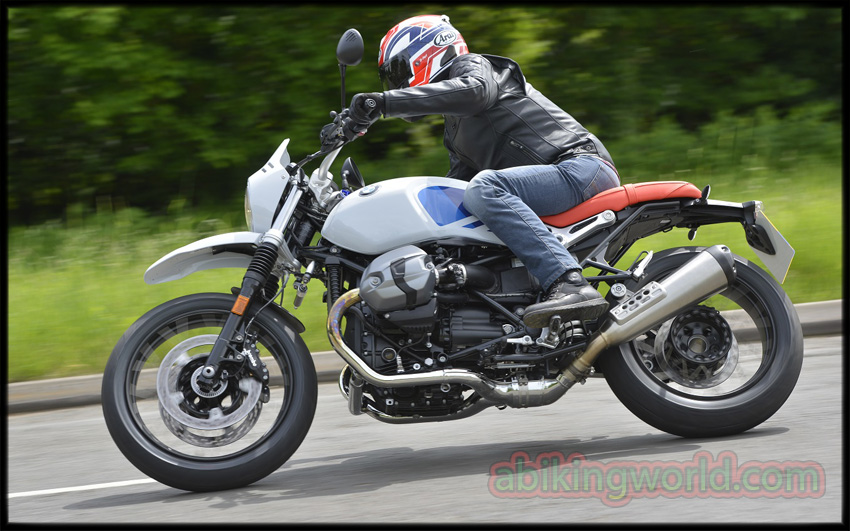
| MODEL | BMW R NINE T URBAN G/S |
| ENGINE TYPE | Four stroke, two cylinder horizontally opposed Boxer, two camshafts and four radially aligned valves per cylinder, / central counter balancer shaft. |
| Year | 2020 |
| Displacement / Capacity | 1170 cc / 71.4 cub in. |
| Bore X Stroke | 101 x 73 mm |
| Compression Ratio | 12.0:1 |
| Cooling System | Air / Oil cooled |
| Max Power | 81 kW / 110 hp @ 7550 rpm |
| Max Torque | 116 Nm / 11.8 kgf-m / 85.6 lb-ft @ 6000 rpm |
| Ignition | — |
| Induction | Electronic intake pipe injection / digital engine management with overrun cutoff, twin-spark ignition |
| Start System | Electric |
| TRANSMISSION SPECS | |
| Lubrication | Wet sump |
| Gear Box | Constant mesh 6-speed |
| Clutch | Single dry plate clutch, hydraulically operated |
| Primary / Final Drive | Final Drive : Shaft / Primary Drive : |
| Secondary drive | — |
| Gear Ratio | Ist 2.375 / 2nd 1.696 / 3rd 1.296 / 4th 1.065 / 5th 0.939 / 6th 0.848:1 |
| CHASSIS SPECS | |
| Frame | Four-part frame concept with front frame and three-part rear frame, load-bearing engine-gearbox unit, rear-seat frame / removeable for one-up riding |
| Front Suspension | Upside-down telescopic forks, 46 mm fixed-fork-tube diameter |
| Rear Suspension | Cast aluminium single swinging arm with BMW Motorrad Paralever; central spring / strut,spring preload fully adjustable by hook wrench, adjustable rebound-stage damping |
| Brakes | Front Brakes: 2 x 320 mm Foating brake discs, 4 piston radial calipers / / Rear Brakes : Single 265 mm disc, 2 piston floating caliper / / ABS : BMW Motorrad ABS |
| Traction Management | — |
| Exhaust System | Closed-loop 3-way catalytic converter, emission standard EU-3 |
| DIMENSION SPECS | |
| Overall Length | 2175 mm / 85.6 in |
| Seat Height | 820 mm / 32.3 in |
| Overall Height | 1330 mm / 52.3 in |
| Overall Width | 880 mm / 34.6 in (incl. mirrors) |
| Overall Weight | Dry Weight - / Wet Weight - 220 kg / 485 lbs |
| Wheelbase | 1527 mm / 60.1 in |
| Inner Leg Curve: | 1890 mm / 74.4 in |
| WHEEL SPECS | |
| Wheels / Rims | Front Rim : 3.00 x 19, Cast alloy / Rear Rim: 4.50 x 17, Cast alloy / |
| Front Tyre | 120 / 70 - R19 |
| Rear Tyre | 170 / 60 - R17 |
| Front Wheel Travel | 125 mm / 4.9 in |
| Rear Wheel Travel | 140 mm / 5.5 in |
| Castor | 116.1 mm / 4.4 in |
| Steering Angle | 61.5 ° |
| FUEL SYSTEM | |
| Fuel Capacity | 17 Litres / 4.5 US gal / 3.7 Imp gal |
| Fuel Reserve | Approx. 3.5 Litres / 1 gal |
| Fuel Consumption | 5.9 L/100 km; 48 mpg‑imp (40 mpg‑US) |
| CAPACITIES | |
| Engine oil | — |
| Brake fluid | — |
| Top Speed | 125 mph (Est) |
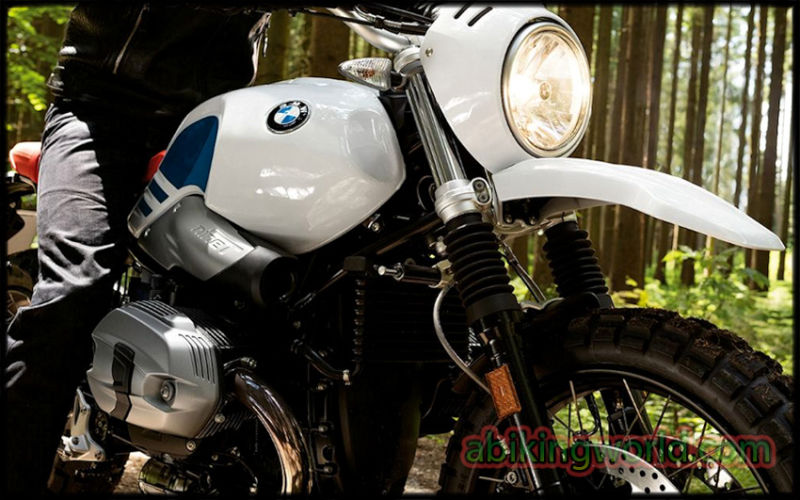
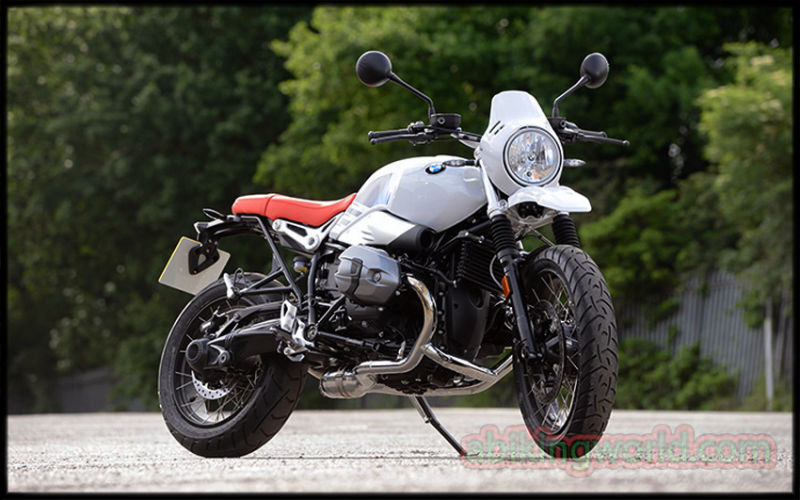

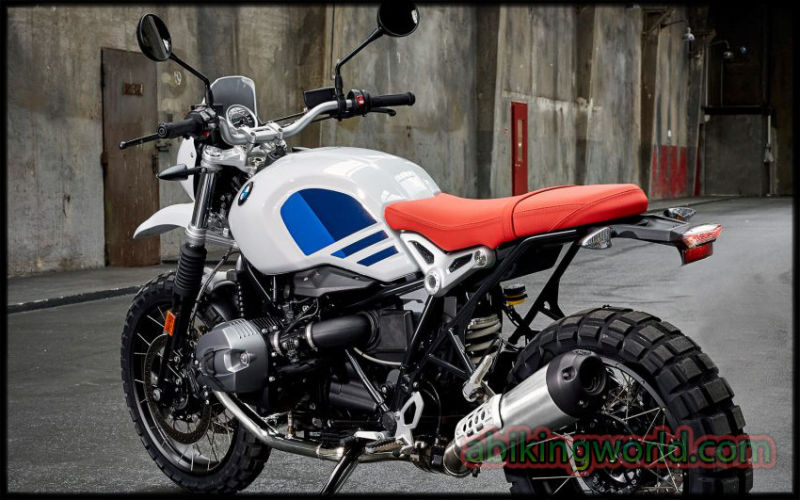

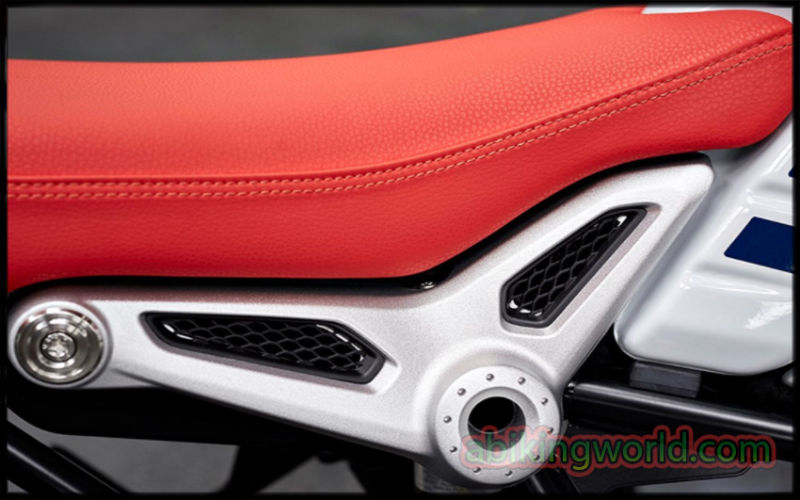
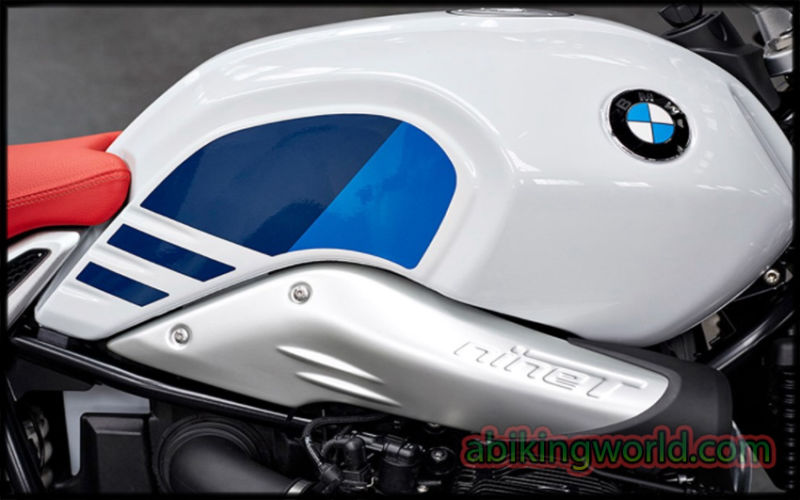
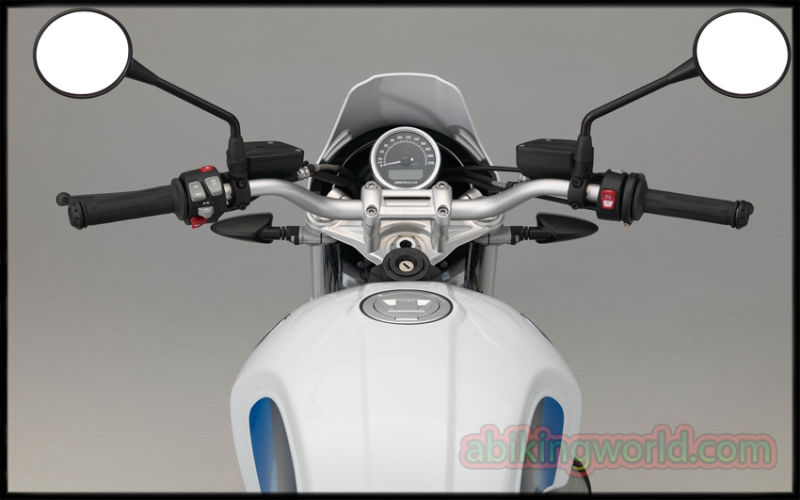
BMW had no idea when it launched the R nineT in 2013 to commemorate Motorrad's 90th anniversary that anyone would like it or that the bikes would sell. Four years later, it's opened an entirely new market segment for the Bavarian brand, spawning four derivatives of the bike to create BMW's Heritage line. The R nineT Urban G/S comes as the latest addition, its styling reminiscent of the 1980 BMW R80G/S that created the adventure bike segment we know today. As with the other R nineT derivatives, most components are shared with the other bikes, the bulk of design attention focused on aesthetics, design, and spiritual vibe. All with good reason, as BMW’s market research revealed that the buyer for this bike is different than your average motorcycle showroom wanderer. When it comes to R nineT buyers, only 13 percent are first-time buyers (compared to a 23 percent segment average). The average buyer is older (49 versus 45) and well-to-do (45 percent higher household income than segment average). They also buy with their eyes, 62 percent of them saying that style and design are their top purchase reason (versus 40 percent segment average). Basically: wealthy riders with another bike or two in the garage looking for something pretty and cool. BMW’s strategy has been to capture more of these riders with primarily styling variations on a platform that’s already received heaps of praise—simply by trying to offer enough flavors to suit more riders’ tastes. Not necessarily traditional bike development, but these aren’t traditional times. Spec-wise, this means there are a lot of similar numbers. Same 1,170cc air-/oil-cooled flat twin, and same claimed 96.5 hp and 75.9 pound-feet of torque as the rest of the line, and the same 43mm conventional fork with 4.9 inches of travel and rear paralever arm providing 5.5 inches as on the R nineT Scrambler. (The original R nineT fork was inverted.) Like the other derivatives, the G/S's tank is steel and the subframe is now three pieces instead of four (you'll have to cut the back off if you want a stubby seat). The Urban G/S is actually quite similar to the Scrambler, albeit in different clothes. The two are the same across the board except for the Urban G/S's wire-spoke wheels, the Scrambler's higher exhaust, and the tire choices offered (the Urban G/S features Continental's TKC 80 tire if a knobby is preferred, whereas the Scrambler is equipped with Metzeler Karoo 3s). Everything else is style. The beak, headlight cowl, single bench seat, and paint all make for a fancy new set of duds for the roadster, which makes it sort of surprising that BMW would make two models with such similar purpose. Neither model is particularly better in the dirt they pretend to be designed for (the Scrambler’s higher pipe would avoid rocks better, but the G/S’s TKCs are far superior to the Metzelers off tarmac).
Video Courtessy of Auto Moto TV